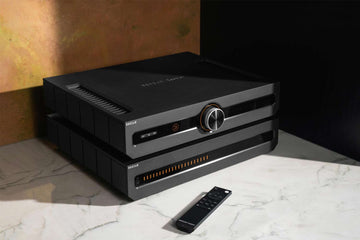
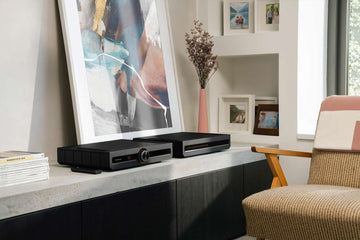
What is the Roksan Caspian 4G Streaming Amplifier?
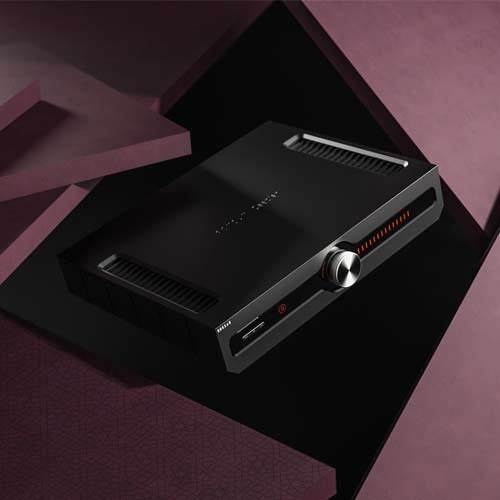
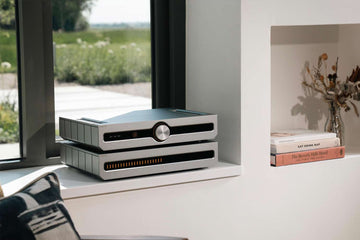
The Roksan Caspian 4G Streaming Amplifier is an all-in-one high-end integrated amplifier that combines a streaming platform, digital-to-analogue conversion, preamplifier stage, and Class AB power amplification in a single chassis. It is designed to act as the central hub of a modern hi-fi system, removing the need for separate streamer, DAC, and preamp components. It is part of Roksan’s Caspian 4G series, developed under the Monitor Audio Group and positioned as a reference-level lifestyle hi-fi product.
What streaming services and platforms does it support?
It uses BluOS as its core streaming platform, which provides access to major services such as TIDAL, Qobuz, Spotify, and internet radio, along with support for high-resolution playback up to 24-bit/192kHz. It also supports AirPlay 2, Bluetooth (aptX), and Roon Ready functionality, allowing it to integrate into both casual and high-end multi-room audio systems.
Does it include a DAC?
Yes, it includes Roksan’s Rapture DAC technology, which handles digital-to-analogue conversion for all streaming and digital inputs. The DAC is designed for high-resolution audio playback up to 24-bit/192kHz and is part of the amplifier’s fully integrated digital architecture.
How much power does it deliver?
The built-in Class AB amplifier delivers approximately 105 watts per channel into 8 ohms and around 200 watts per channel into 4 ohms. This gives it enough output to comfortably drive a wide range of bookshelf and floorstanding speakers, including many that are considered difficult loads in real-world listening environments.
What amplification design does it use?
It uses Roksan’s Euphoria amplification architecture, a Class AB design that prioritises control, low distortion, and dynamic range. The amplifier is built with a dual-mono-inspired layout and separate power handling sections for improved stability and channel separation.
Can it drive difficult speakers?
Yes, it is designed to handle demanding speaker loads. The combination of relatively high current delivery, robust power supply design, and Class AB topology means it can control larger floorstanding speakers and maintain composure at higher volumes without sounding strained.
What inputs and outputs does it have?
It includes a broad range of connectivity such as RCA and balanced XLR analogue inputs, HDMI eARC for TV integration, phono input for turntables (moving magnet), coaxial and optical digital inputs, Bluetooth, Ethernet, and Wi-Fi. It also provides pre-outs and subwoofer outputs, allowing it to integrate into more complex systems or expand with external amplification.
How is it controlled?
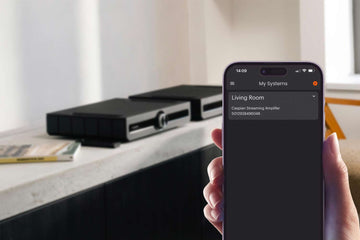
Control is handled through the BluOS app for streaming and playback, while system configuration and device management are handled through the MaestroUnite app. It also includes a physical remote control for basic operation such as volume and input selection.
Is it suitable for home theatre use?
Yes, it can be integrated into a home theatre system via HDMI eARC or analogue inputs. In this setup, it can function as a high-quality front left and right amplifier, significantly improving dialogue clarity and music playback compared to many AV receivers.
Does it support multi-room audio?
Yes, because it is built on BluOS, it supports multi-room audio with the ability to synchronise playback across multiple BluOS-compatible devices. This allows it to form part of a whole-home audio system if desired.
What is the sound character like?
The overall sound signature is generally neutral, controlled, and highly detailed. It tends to emphasise clarity, imaging precision, and tight bass control rather than warmth or coloration. The presentation is designed to be transparent, allowing the characteristics of the recording and speakers to dominate.
How is the build quality?
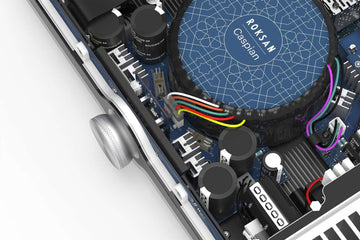
The amplifier is built around a substantial aluminium chassis with a focus on rigidity and vibration control. Internally it uses a large power supply and carefully separated circuit architecture to reduce noise and improve channel performance. The overall feel is solid and premium, consistent with its high-end positioning.
Does it require additional components?
Technically no, since it includes streaming, DAC, and amplification in one unit. However, some users may still choose to add external power amplification or a separate streamer in very high-end systems, depending on performance goals.